What Does a Site Work Contractor Actually Do?
Site work is everything that happens before a building goes up. Here's what's actually in scope, and why it's a real line item, not an afterthought.
Quick Answer
- A site work contractor handles everything below and around a building before vertical construction starts, clearing, grading, excavation, utilities, drainage, and stormwater/erosion control.
- Site preparation is a measurable segment of the construction industry, employing workers at an average $37.87/hour nationally across roughly 30,600+ firms (BLS).
- Site work is a real budget line, averaging 7.6% of total new-home construction cost, not an incidental expense (NAHB).
- Using one contractor for the full site-work scope avoids the handoff gaps that happen when grading, utilities, and stormwater are split across separate subs.
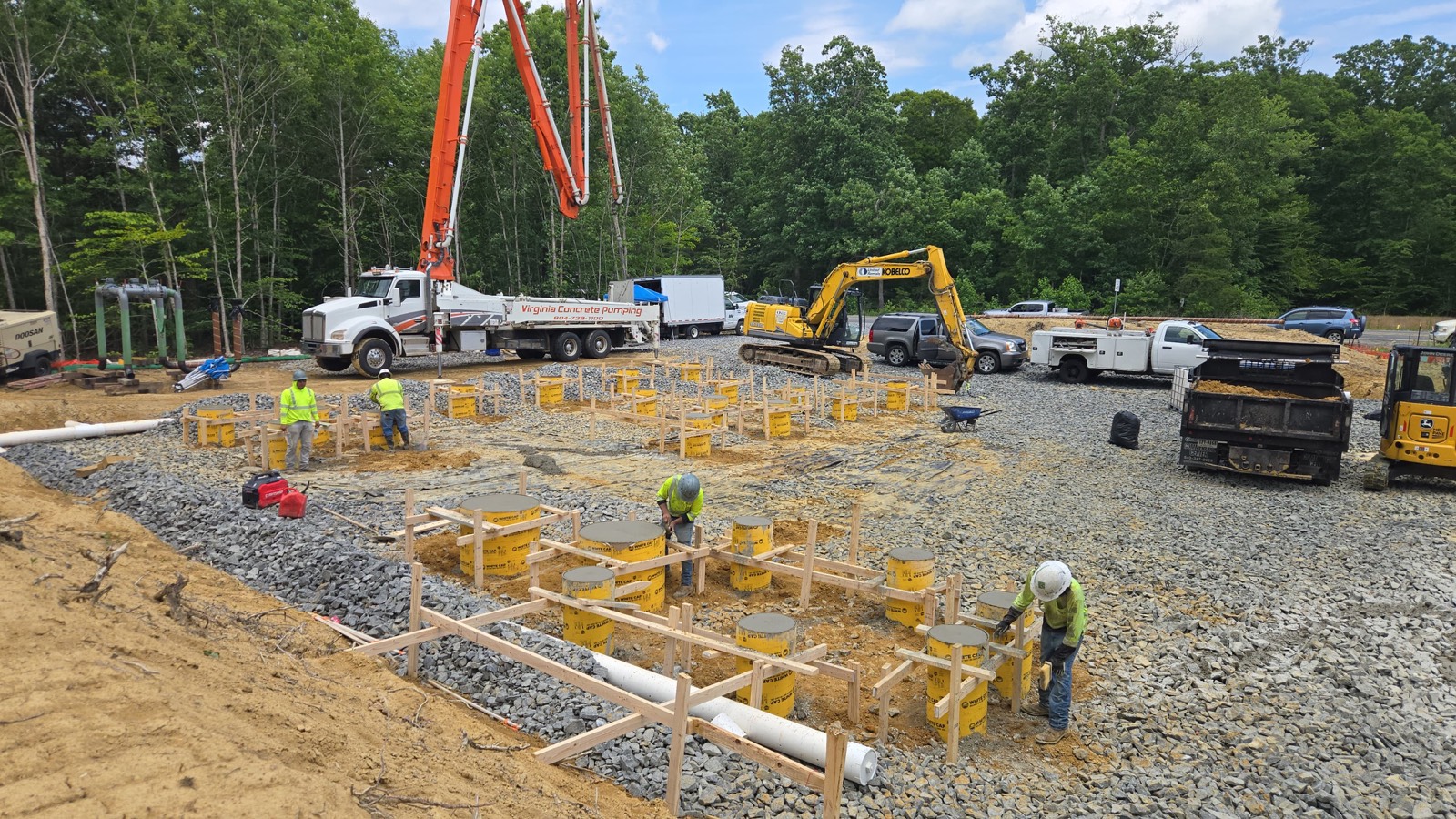
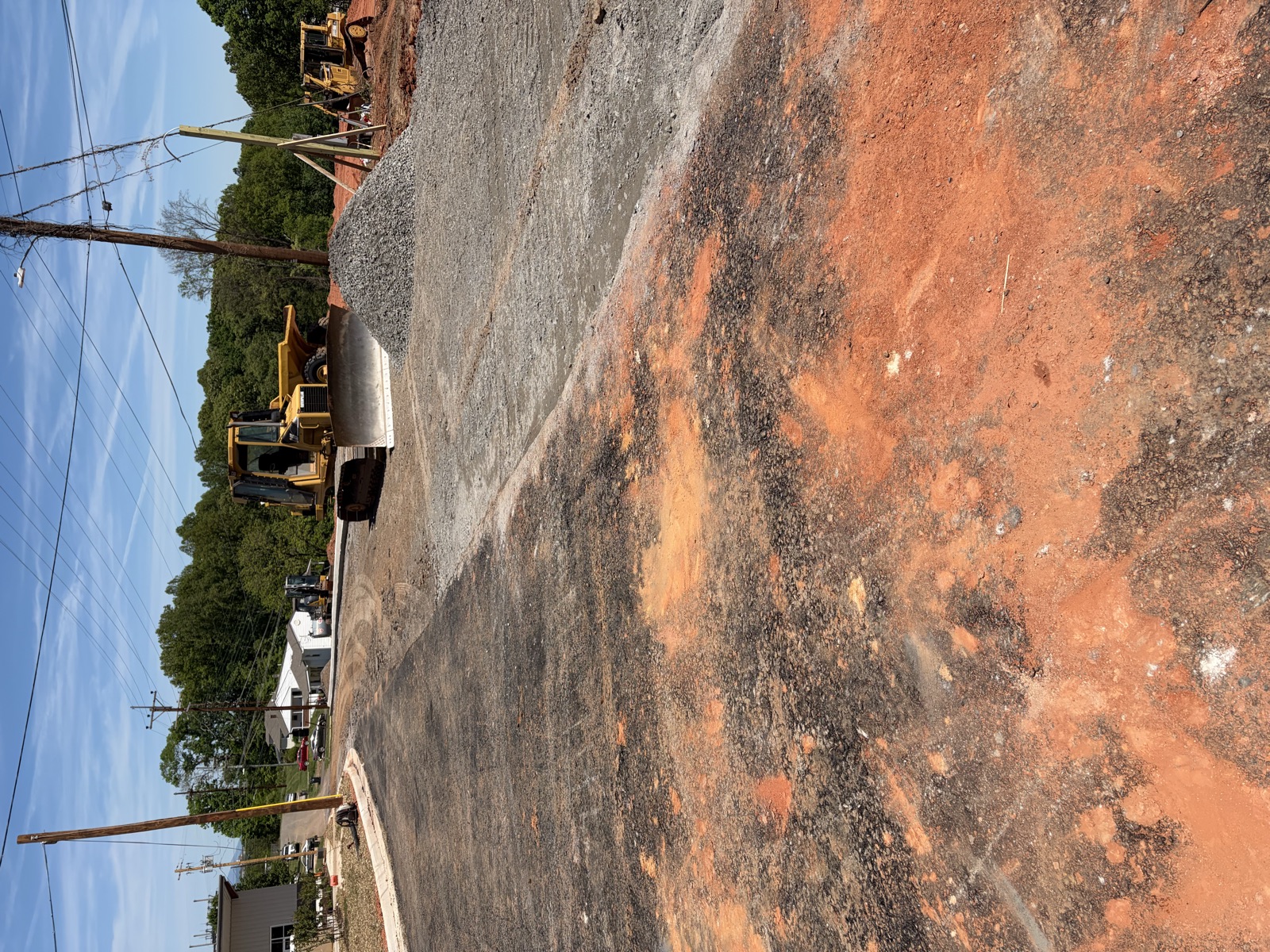
Short answer: a site work contractor handles everything below and around a building before vertical construction ever starts, clearing the land, grading it to plan, digging foundations and utility trenches, managing stormwater and erosion control, and handing off a pad that's actually ready to build on.
It's a question worth asking plainly, because "site work" gets used loosely in construction conversations without much explanation of what's actually inside it, or why it's treated as its own trade rather than something a general contractor just handles along the way.
The Disciplines Under "Site Work"
"Site work" isn't one task. It's a collection of disciplines that all have to happen in the right order before a builder can start construction:
- Grading: cutting and filling earth to the elevations an engineer specified, so the pad, parking lot, or lawn actually holds the shape it's supposed to.
- Excavation: digging footings, foundations, basements, and utility trenches to the depth and dimensions the plans call for.
- Underground utilities: installing and tying in water, sewer, storm, and dry utility lines before the site gets covered back up.
- Drainage: making sure water moves off the site the way it's designed to, not toward the building.
- Stormwater & VSMP compliance: erosion and sediment control during construction, plus long-term stormwater management once it's done.
- Demolition, hauling, and paving: clearing existing structures, moving material in and out, and finishing surfaces once the site work below is done.
The Industry, By the Numbers
Site work is recognized as its own distinct trade in federal labor data, not folded into general construction labor.
Site preparation contractors (NAICS 238910) earn an average of $37.87 per hour nationally, reflecting the specialized equipment operation and grading expertise the trade requires, distinct from general construction labor.
Source: U.S. Bureau of Labor Statistics: Occupational Employment and Wage StatisticsWhy Site Work Is a Real Line Item, Not an Afterthought
It's easy to think of site work as a small preliminary step before the "real" construction starts. National cost data says otherwise.
Site work, which covers grading, excavation, and utility connections, averages 7.6% of total new-home construction cost nationally, about $32,719 per home in 2024. That's a meaningful budget line, not a rounding error.
Source: NAHB: Cost of Constructing a Home in 2024Have a project that needs the site work scoped out?
A free site walk gets you an itemized breakdown of what's actually involved.
Start with a free site walk →Site Work Contractor vs. General Contractor
A general contractor typically manages the overall build, the structure, systems, and finishes above grade. A site work contractor handles what's below and around it. On many projects, the site work contractor is a specialized subcontractor working for the GC; on others (particularly smaller commercial and residential projects), the site work contractor's scope can extend further into the build. Either way, the site work has to be right before the GC's crews can start, a bad grade or a missed utility tie-in becomes everyone's problem once concrete gets poured on top of it.
Why One Contractor for the Whole Scope Matters
It's common for site work to get split across multiple subs, one for grading, another for utilities, a third for stormwater compliance. Each handoff between subs is a place where something can fall through the gap: a grade that doesn't match what the utility sub expected, an erosion control detail nobody owns. Using one contractor for the full site-work scope means one point of contact, one schedule, and one party accountable for the pad you actually get handed, in writing, signed off by your superintendent.
See our full Services page for the complete breakdown of what we self-perform, from grading through pavement. If you're specifically trying to understand grading costs or timelines, read How Much Does Grading Cost in Lynchburg, VA? and How Long Does a Site Grading Project Take?
Frequently Asked Questions
What does a site work contractor do?
A site work contractor handles everything below and around a building before vertical construction starts, clearing, grading, excavation, utility installation, drainage, and stormwater/erosion control. Some also handle paving, demolition, and hauling. The goal is to hand a builder a pad-ready site: graded to plan, utilities in place, and compliant with stormwater regulations.
Is a site work contractor the same as a general contractor?
Not usually. A general contractor typically manages the overall build, the structure, systems, and finishes above grade. A site work contractor handles what's below and around it, often as a specialized subcontractor working for the GC, though on smaller commercial and residential projects the site work contractor's scope can extend further into the build.
How big is the site preparation contracting industry?
Site preparation contractors (NAICS 238910) represent a measurable segment of the U.S. construction industry, with tens of thousands of firms nationally and an average wage of $37.87 per hour as of the latest BLS wage data, a real, specialized trade, not a generic labor category.
Why hire one contractor for the whole site-work scope instead of several subs?
Because each handoff between subs is a place where something can fall through the gap, a grade that doesn't match what the utility sub expected, an erosion control detail nobody owns. One contractor for the full scope means one schedule, one point of contact, and one party accountable for the pad you actually get handed.