How Much Does Grading Cost in Lynchburg, VA?
A straight answer on what drives grading costs in the Lynchburg, VA area, for owners, GCs, and homeowners planning a site work budget.
Quick Answer
- Site work, which covers grading, excavation, and utilities, averages 7.6% of total new-home construction cost, or about $32,719 nationally in 2024 (NAHB).
- A clean, level residential lot costs far less to grade than one needing significant cut-and-fill, clearing, or imported fill.
- Permitting can add to the number: Virginia generally requires a VSMP permit once land disturbance passes 1 acre, or 2,500 sq ft in Chesapeake Bay Preservation Act areas (Virginia DEQ).
- We don't quote grading by square footage over the phone. Every job gets a free site walk first.
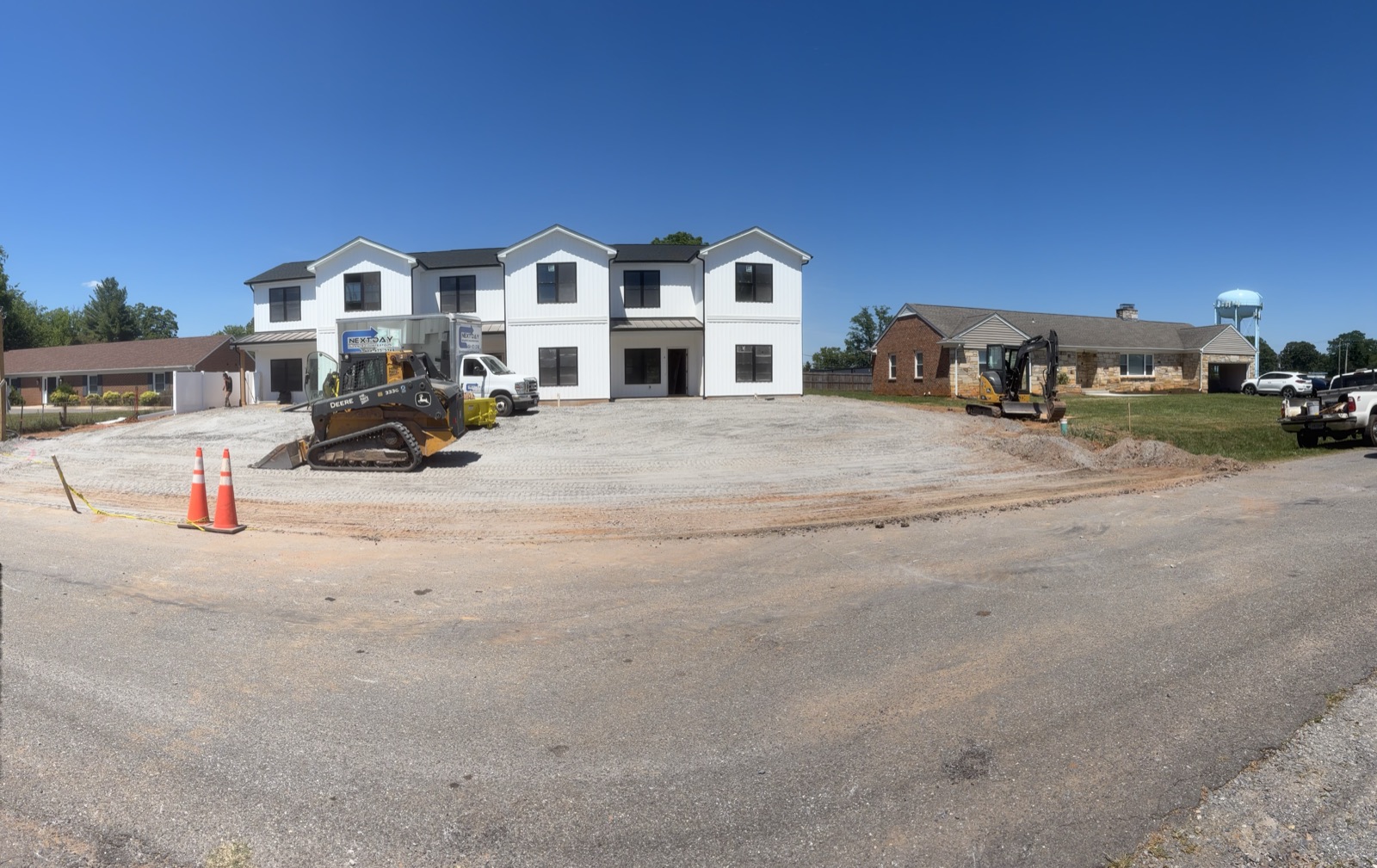
If you're pricing out a grading job in the Lynchburg area, the honest short answer is: it depends on your site's size, soil, slope, access, and how much dirt actually has to move, and no contractor can give you a real number without walking the ground first. But there's real data behind what "it depends" actually means, and it's worth understanding before you call around for quotes.
Grading costs vary more than most line items in a construction budget, because two lots of the same square footage can require wildly different amounts of work. A flat, well-drained residential lot and a sloped lot with rock and a high water table aren't the same job, even if they're the same size. That's true whether you're a homeowner adding a driveway or a GC pricing site work for a commercial pad.
National construction-cost data gives a useful starting point for understanding where grading fits into a project budget overall.
Site work, including grading, excavation, and utility connections, makes up an average of 7.6% of total new-home construction cost, or about $32,719, based on builders surveyed nationally in 2024.
Source: NAHB: Cost of Constructing a Home in 2024What Actually Drives the Price of a Grading Job
Grading isn't priced off a single number like "dollars per square foot," because the factors that drive cost aren't uniform across sites:
- Site size and scope. A residential lot-leveling job and a five-acre commercial pad aren't in the same category of work.
- Soil and slope conditions. Rocky soil, high water tables, and steep grades all add time and equipment to the job.
- Cut-and-fill balance. If the dirt being cut can be reused as fill on the same site, you save significantly on hauling. If it can't, trucking excess material off-site, or bringing fill in, adds real cost.
- Access. Tight urban lots, nearby structures, or limited equipment access all slow the work down.
- Permitting. Projects that disturb enough land to trigger Virginia's stormwater rules need erosion and sediment controls priced into the job.
Residential vs. commercial grading
Residential grading, which covers leveling a lot, correcting drainage, and prepping a small addition or outbuilding pad, is generally the smallest scope we take on. Commercial grading, which covers pad prep for a new building, parking lot subgrade, and large-scale cut-and-fill for a subdivision, involves heavier equipment, longer schedules, and more coordination with engineers and inspectors, which shows up in the price.
Why Permitting Can Add to the Number
One factor a lot of people don't budget for up front: permitting. Virginia's stormwater rules apply to a meaningful share of grading projects, not just large commercial ones.
Virginia generally requires a VSMP permit once a project disturbs 1 acre of land or more, but that threshold drops to just 2,500 square feet inside Chesapeake Bay Preservation Act localities, which covers Lynchburg-area jurisdictions.
Source: Virginia DEQ & Code of Virginia (VESMA)If your project crosses that threshold, a Stormwater Pollution Prevention Plan (SWPPP) and erosion-and-sediment control measures such as silt fence, sediment basins, and stabilization become part of the scope. We cover this in more depth in Do I Need a VSMP Permit in Virginia?, but the short version for budgeting purposes: don't assume permitting is a formality on anything beyond very minor work.
Want a number that reflects your actual site, not a guess?
30 to 45 minutes on the ground, an itemized quote within five business days.
Start with a free site walk →What's Included in a Written Grading Quote
When we quote a grading job, the number covers the itemized scope: mobilization, cut-and-fill earthwork, compaction, any erosion and sediment control required for the permit, and a final grade check against plan. You get that in writing, with a real timeline, within five business days of the site walk, not a range that shifts once work starts.
The Only Way to Get a Real Number
Every grading job we quote starts with a free, 30 to 45 minute site walk, no charge, no obligation. It's the only way to see the soil, the slope, the access, and the actual scope of cut-and-fill needed, instead of guessing off a satellite photo or a square-footage rule of thumb. If you're planning a grading project anywhere in the Lynchburg area, that's the place to start.
Frequently Asked Questions
How much does grading cost in Lynchburg, VA?
It depends on site size, soil and slope conditions, access, and how much cut-and-fill balancing the site needs. A small residential lot might run a few thousand dollars; a commercial pad with significant earthwork can run into the tens of thousands or more. National data from NAHB puts average site-work costs at roughly $32,719 for a new home, about 7.6% of total construction cost, though every site is different. We give you a real number after a free site walk, not a phone quote.
Why don't you give a price over the phone?
Because two sites of the same size can cost very differently depending on soil, slope, access, and how much dirt actually needs to move. A number given without seeing the ground is a guess, not a quote, and guesses tend to grow once the crew shows up and finds what the satellite photo didn't.
Does the price include permits and erosion control?
When a project's land disturbance requires a VSMP permit, generally at 1 acre, or 2,500 square feet in Chesapeake Bay Preservation Act localities, SWPPP review and erosion-and-sediment-control installation are scoped into the quote as part of the job, not billed as a surprise add-on later.
What's the difference between grading and excavation?
Grading shapes the surface of a site: cut-and-fill, pad prep, finish elevations. Excavation removes and shapes earth below the surface: footings, trenches, basements. Most projects need both, and we self-perform each. See our Grading and Excavation pages for the full scope of each.